


7 Cyber Security Mistakes Solihull Businesses Are Making (And How to Fix Them Before It's Too Late)
Solihull's business landscape is thriving: from professional services firms near the town centre to retail operations along the High Street. But behind the prosperity, there's a silent threat that's catching too many local businesses off guard: cybersecurity vulnerabilities.
The uncomfortable truth? Most cyber breaches aren't the result of sophisticated hacking operations. They happen because businesses make the same preventable mistakes over and over again. And when they do, the consequences are severe: lost revenue, damaged reputation, regulatory penalties, and in some cases, business closure.
If you're running a business in Solihull, you can't afford to assume your current approach is good enough. Here are the seven most critical cybersecurity mistakes we see regularly: and the practical steps you need to take to fix them.
1. Weak and Reused Passwords
The Problem: Simple passwords like "Solihull2026" or "admin123" can be cracked in seconds using automated tools. Even worse, reusing passwords across multiple accounts means that when one service gets breached, every account sharing that password is compromised.
Your email, invoicing system, banking portal, and customer database shouldn't all be protected by variations of the same password: but for many Solihull businesses, they are.
How to Fix It:
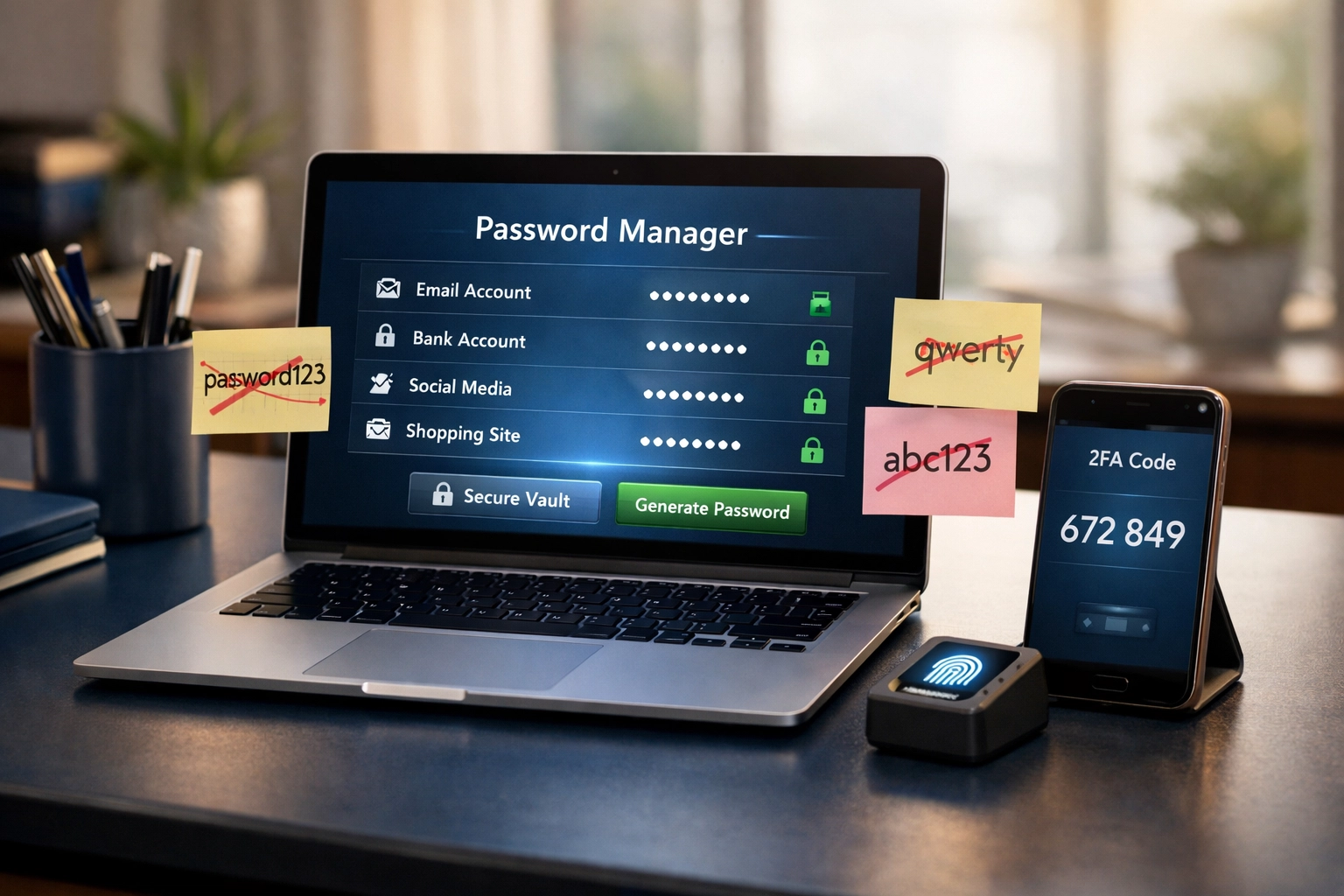
Implement a password manager across your organization. Tools like Bitwarden, 1Password, or KeePass securely store and generate complex, unique passwords for every account. Your team won't need to remember dozens of passwords: they'll remember one master password.
More importantly, enable multi-factor authentication (MFA) on critical accounts, starting with email and invoicing systems. Even if a password is compromised, MFA adds a second layer of verification that stops attackers in their tracks.
2. Outdated and Unpatched Software
The Problem: Every unpatched application on your network contains known vulnerabilities that cybercriminals actively exploit. Software vendors release security patches for a reason: they've identified weaknesses that attackers are already targeting.
Yet we regularly encounter Solihull businesses running outdated versions of critical software, from Windows 7 machines to unpatched WordPress sites, simply because "it still works."
How to Fix It:
Automate software updates and patch management wherever possible. Establish a clear responsibility structure: someone in your business needs to know what's updated and what isn't.
Conduct regular audits to identify and eliminate outdated, unsupported software. If you're still running systems that no longer receive security updates from the vendor, you're actively maintaining a vulnerability.
3. Inadequate Employee Cybersecurity Training
The Problem: Research shows that 95% of cybersecurity issues have a human element. Your firewall might be state-of-the-art, but if your team clicks on phishing links or uses weak passwords, technical defenses become irrelevant.
Most businesses treat cybersecurity training as a tick-box exercise: a one-time presentation during onboarding that employees promptly forget. Without regular reinforcement, even well-intentioned staff make dangerous mistakes.
How to Fix It:
Develop a regular, mandatory cybersecurity training program that covers password practices, phishing recognition, social engineering tactics, and safe data handling. Training shouldn't be annual: it should be ongoing with periodic refreshers.
Conduct simulated phishing tests to identify which team members need additional support. This isn't about catching people out: it's about creating a culture where everyone understands they're part of your security defense.

4. Poor Data Backup Practices
The Problem: Many Solihull businesses assume their data is backed up because they enabled automatic cloud backups three years ago. But assumptions aren't good enough. When ransomware strikes or a system fails, they discover their backups are outdated, incompatible, or completely unusable.
How to Fix It:
Make backup an active process with clear ownership. Someone in your business should be responsible for verifying that backups are running correctly and consistently.
Regularly test backups for recovery. It's not enough to know data is being backed up: you need to confirm you can actually restore it when needed. Schedule quarterly recovery tests to ensure your backup system works under pressure.
Maintain redundancy so that data loss from cyberattacks, hardware failures, or human error doesn't leave your organization unable to recover.
5. Uncontrolled Remote Work Security
The Problem: Remote and hybrid work arrangements are now standard across Solihull businesses, but over 56% of IT leaders believe remote work increases breach likelihood. Unsecured home Wi-Fi networks, personal devices accessing sensitive systems, and coffee shop connections create serious vulnerabilities.
Your team might be productive from home, but are they secure?
How to Fix It:
Establish clear remote work security policies requiring all devices to have end-to-end encryption, endpoint protection, and fully updated software. These policies should be documented, communicated, and enforced.
Where possible, supply company-managed hardware that meets your security standards rather than relying on employees to manage their own device security. You can't control what you don't provide.
Implement VPNs and multi-factor authentication for all remote access to company systems. If someone is connecting from outside your office network, they should be doing so through secure, verified channels.

6. Weak Access Control and Over-Sharing of Data
The Problem: Too many businesses operate on the principle that "everyone has access to everything because it's easier." Shared login credentials, unrestricted file access, and no audit trails mean you have no visibility over who accessed what, when, or why.
When an employee leaves, do you know exactly what they had access to? Can you revoke it immediately? For most businesses, the honest answer is no.
How to Fix It:
Implement individual access rights tied to specific roles and job functions. Your marketing assistant doesn't need access to payroll systems. Your receptionist doesn't need administrative privileges on your network.
Restrict data access so employees can only reach information they need for their roles. This isn't about distrust: it's about limiting exposure in case an account is compromised.
Maintain records and audit trails of who has access to what, and remove access promptly when employees leave or change roles. Develop formal security policies establishing clear expectations for sensitive data handling.
7. Underestimating Phishing and Social Engineering Attacks
The Problem: Phishing remains the top threat action in breaches, responsible for over 20% of cases. Yet many Solihull businesses treat it as a solved problem because they sent an email about it once.
Modern phishing attacks are increasingly sophisticated, well-written, personalized, and designed to create urgency. They no longer look like obvious scams from foreign princes. They look like emails from your bank, your supplier, or your CEO.
How to Fix It:
Teach your team to identify phishing attempts: suspicious sender addresses, malicious links disguised as legitimate buttons, unexpected attachments, and requests that create artificial urgency.
Conduct regular simulated phishing campaigns to test awareness and identify which employees need additional training. This ongoing testing creates a security-conscious culture rather than a one-time awareness spike.
Establish clear incident reporting procedures so employees can quickly alert your IT team to suspicious emails without fear of judgment. The faster you're notified, the faster you can contain potential threats.

Don't Wait for a Breach to Take Action
These seven mistakes share a common thread: they're all preventable with the right combination of technical solutions and organizational commitment. Implementing tools without training, or training without proper tools and policies, leaves gaps that attackers exploit.
If you're a business owner in Solihull reading this and recognizing your own practices, you're not alone: but you are at risk. The good news? Every one of these vulnerabilities can be fixed with expert guidance and a proactive approach.
Ready to strengthen your cybersecurity posture? Wesson & Co. provides comprehensive IT support in Solihull tailored to the needs of Midlands SMEs. We help businesses implement robust security frameworks, conduct regular vulnerability assessments, and build teams that understand their role in cybersecurity.
Book a Cyber Security Lock Check (External Pentest) to identify exactly where your vulnerabilities are: before the cybercriminals do. Or speak to our team about long-term IT support contracts that keep your systems secure, updated, and resilient.
Don't wait for a breach to take cybersecurity seriously. Get in touch today.